
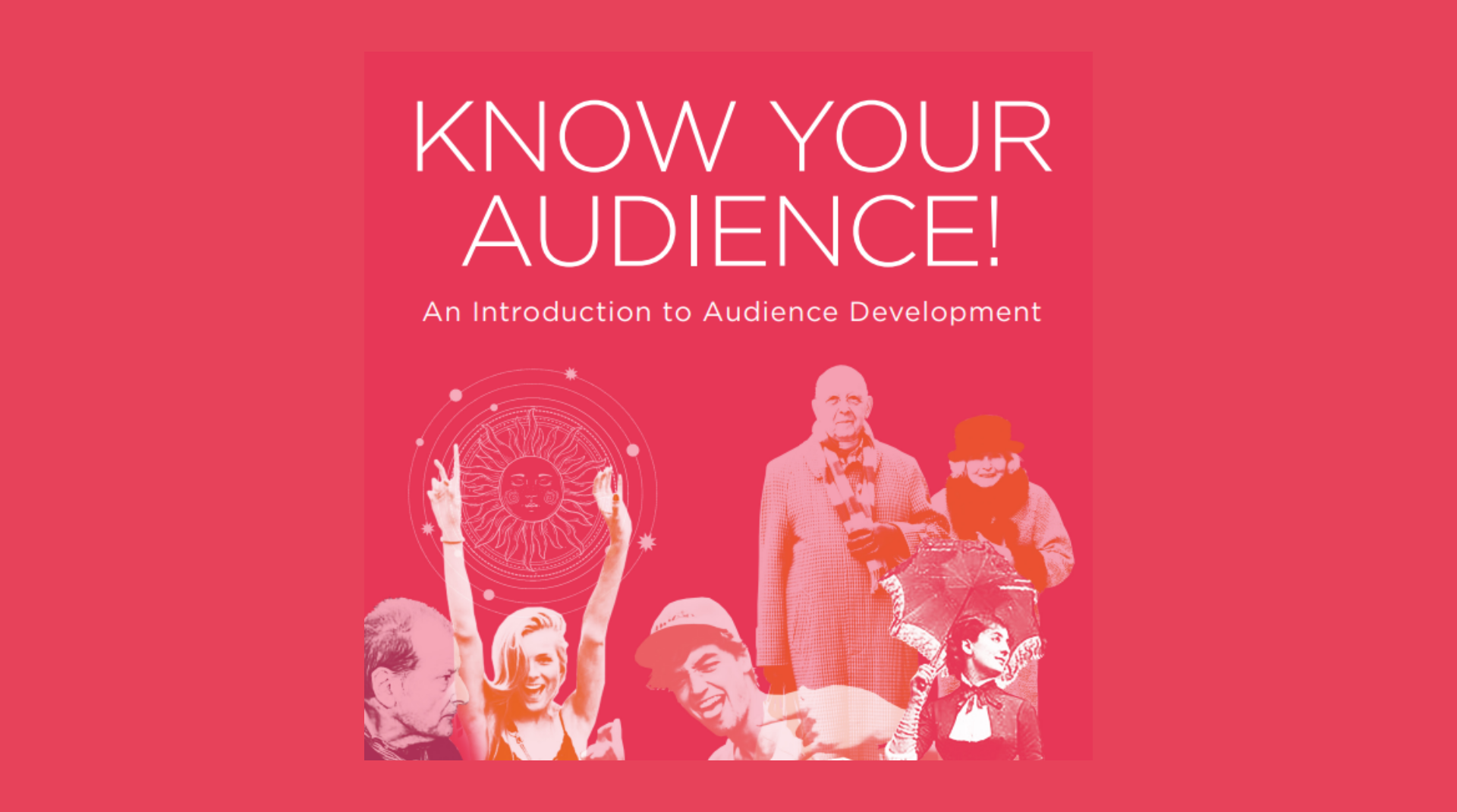
Guide book: Know your audience
Contents:
About the Book
How to Use the Book
Download the Book
Back to Overview
About the Book
KNOW YOUR AUDIENCE! is written by Søren Friis Møller, Ph.D. in management in the field of culture.
Graphic design and organization: Nanna Grunwald.
How to Use the Book
This handbook is your guide to working strategically with audience development in cultural institutions. Through ten chapters, you will gain a practical and analytical approach to understanding your audience, designing audience development projects, and building stronger relationships with your visitors.
Chapter Overview
Chapter 1: Know Your Audience!
In Chapter 1, you’ll learn about quantitative and qualitative approaches to getting to know your current audience.
Chapter 2: Qualitative data and segmentation
Here you will learn to describe your audience in segments and personas, so you have a good foundation to work with.
Chapter 3: Design Your Audience Development Project
Formulate your audience development project and set goals for it in relation to the three parameters of audience development: Economy, number and attitude.
Chapter 4: The process
In this chapter, you will learn to prioritize the part of the audience development work that is before “The Good Idea”. Partly by taking an extended look at your content and your relationships with the audience, partly by looking at your institution’s level of maturity in relation to generating and utilizing data.
Chapter 5: Design Your Process
Design your process, either based on what is already working well, or as a process inspired by design thinking. Consider how you can use focus groups in your work with audience development.
Chapter 6: Design Anthropology
Here you can go a step further and work on how the ethnographic methods of design anthropology, such as tagging, projective and associative questions, and taste communities, can help you increase awareness of your audience and involve them in the development of content.
Chapter 7: Creating new business models
This chapter is about the business aspects of audience development with a view to changing the work with audience development from being an extra cost to being an extra income for your institution.
Chapter 8: Create More Universes with Your Communication
Work with the communicative aspects of audience development in order to enable your institution to publish in several different universes that are relevant and relevant to different audiences.
Chapter 9: Strategy and managerial anchoring
Here you can work with the strategic and managerial aspects of audience development, partly with a view to preparing a strategy for audience development work and partly to anchor it in your institution and its stakeholders.
Chapter 10: Implementation, evaluation, adjustments and future work
Finally, you work on creating a production plan for the implementation of your audience development project and on evaluating it once it is completed.
The handbook has been prepared as a guide to working with the audience in focus for managers and employees in cultural institutions.